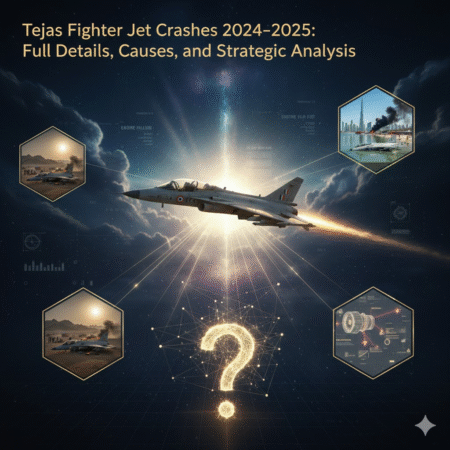
Tejas Fighter Jet Crashes 2024–2025: Full Details, Causes, and Strategic Analysis
Introduction
The Tejas Light Combat Aircraft (LCA) is India’s pride in indigenous aviation. Developed by Hindustan Aeronautics Limited (HAL), this represents India’s ability to design and produce a modern, lightweight, supersonic fighter jet that can compete globally. Designed for agility, speed, and advanced combat capabilities, has been a central part of the Indian Air Force’s (IAF) modernization program.
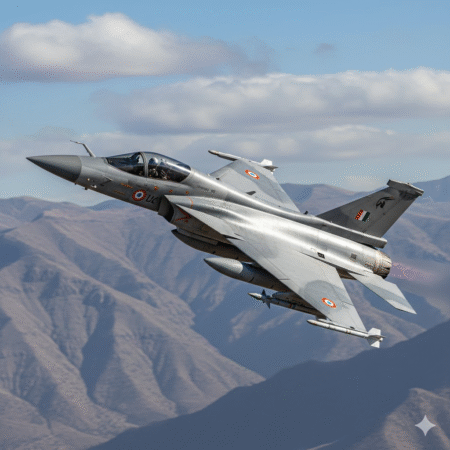
However, despite its advanced features, Tejas has faced operational challenges. In March 2024 and November 2025, two separate incidents of Tejas fighter jets crashing drew global attention. These events raised questions about technical reliability, maintenance protocols, and the risks associated with high-performance aircraft.
This article provides a comprehensive overview of both crashes, their possible causes, strategic implications, and what lessons can be learned for the future of LCA.
Table of Contents
Tejas Fighter Jet Crashes 2024–2025: Full Details, Causes, and Strategic Analysis on youtube
tejas fighter jet crashes 2024–2025: full details, causes, and strategic analysis on Facebook
1. Background of Tejas Fighter Jet
The Tejas LCA project began in 1983 with the goal of developing an indigenous multi-role light fighter aircraft for the IAF. Before Tejas, India relied heavily on imported aircraft like the MiG series, Mirage 2000, and Sukhoi jets. The LCA project was designed to create a versatile, lightweight, supersonic jet capable of air defense, ground attack, and reconnaissance missions.
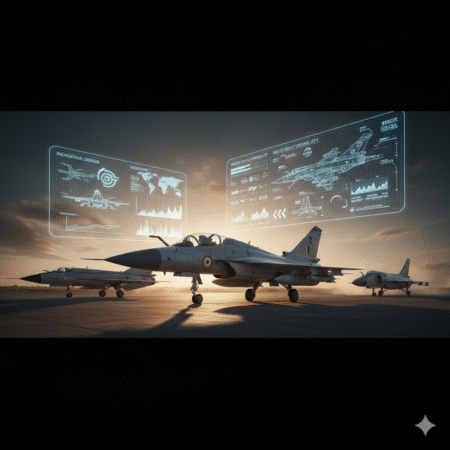
Key Features
- Maximum Speed: Mach 1.8
- Service Ceiling: 50,000 feet
- Combat Range: 500–700 km
- Weapons Systems: Beyond-visual-range missiles, bombs, rockets
- Avionics: Advanced radar, electronic warfare systems, integrated cockpit displays
Variants
- Tejas Mk1: Initial operational model
- Tejas Mk1A: Improved avionics, better maintainability
- Tejas Mk2: Advanced variant with more powerful engines and weapons
This is also designed for export potential, offering an affordable and capable alternative for countries seeking modern fighter jets.
2. First Crash: Jaisalmer, March 2024
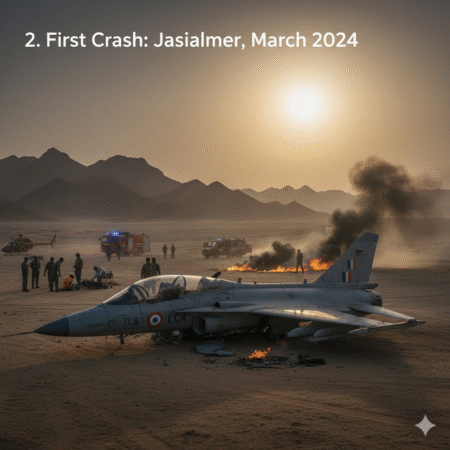
The first significant Tejas crash occurred during a training exercise on 12 March 2024 in Jaisalmer, Rajasthan.
Incident Details
- The aircraft experienced engine seizure, suspected due to an oil pump malfunction.
- The pilot successfully ejected, with no injuries reported.
- This incident marked the first Tejas crash in over 23 years of operations.
Investigation and Findings
- The Indian Air Force (IAF) initiated a Court of Inquiry to determine the exact technical reasons for the crash.
- Early investigations suggested that while the aircraft’s design was robust, maintenance protocols and engine monitoring systems needed enhancement.
- The crash highlighted the importance of strict pre-flight checks and real-time monitoring for high-performance aircraft.
Expert Insights
- Engine failures in advanced fighter jets are not uncommon during testing and training flights.
- HAL and IAF immediately reviewed technical maintenance schedules and updated training procedures to prevent future incidents.
3. Second Crash: Dubai Air Show, November 2025
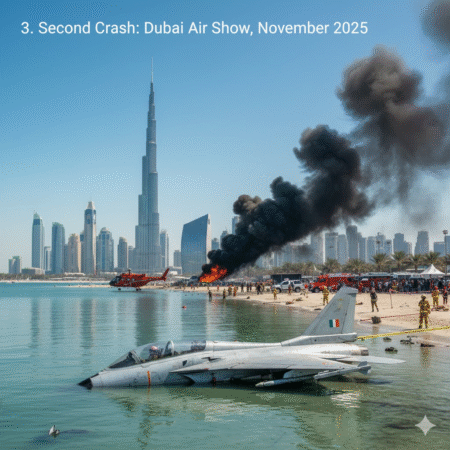
The second incident occurred at the Dubai Air Show in November 2025, one of the most prestigious international aviation exhibitions.
Incident Details
- A jet crashed during a demonstration flight, showing off the aircraft’s agility and maneuverability.
- Witnesses reported thick black smoke, and initial reports indicate that the pilot’s status was not officially confirmed at the time.
- International air shows involve high-risk maneuvers, making demonstration flights inherently dangerous even for experienced pilots.
Investigation
- Authorities are conducting an in-depth investigation into the crash.
- Analysts suggest that aggressive maneuvers, combined with high-speed operations, might have contributed to the incident.
- Unlike the Jaisalmer crash, this incident underscores risks during public display flights, where aircraft are pushed to the edge of operational limits.
4. Analysis of Possible Causes
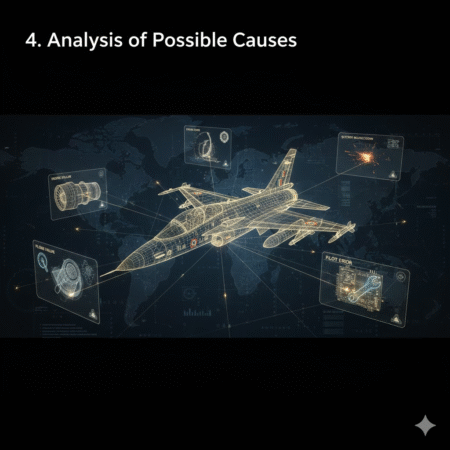
Experts have pointed to several factors that may have contributed to both crashes:
- Engine Malfunction
- The first crash revealed potential oil pump or engine seizure issues.
- This jet uses a GE F404 engine, which is high-performance but sensitive to maintenance and operation conditions.
- Maintenance Lapses
- While HAL and IAF maintain rigorous protocols, minor lapses or delayed inspections can lead to critical failures.
- High-Risk Demonstration Flights
- The Dubai crash highlights the risks of air show maneuvers, where jets are pushed for speed, agility, and acrobatic performance.
- Operational Lessons
- Both crashes emphasize the need for enhanced simulation-based pilot training to prepare for emergency scenarios.
- Continuous technical upgrades and monitoring are crucial for preventing repeat incidents.
5. Strategic Importance of Tejas
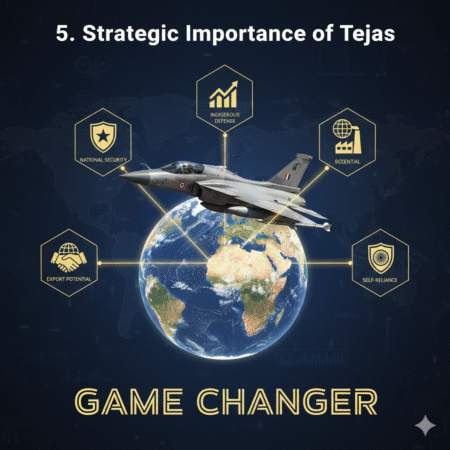
Despite the crashes, Tejas remains a symbol of India’s aerospace capabilities.
Key Points
- Indigenous Development: Reduces reliance on foreign aircraft and strengthens self-reliance.
- Frontline Role: Tejas continues to be integrated into IAF frontline squadrons, replacing older aircraft.
- Export Potential: Several countries are showing interest in acquiring for affordable, modern fighter capabilities.
- Upgrades: Tejas Mk1A and Mk2 include advanced avionics, safety features, and more powerful engines, mitigating some risks highlighted by the crashes.
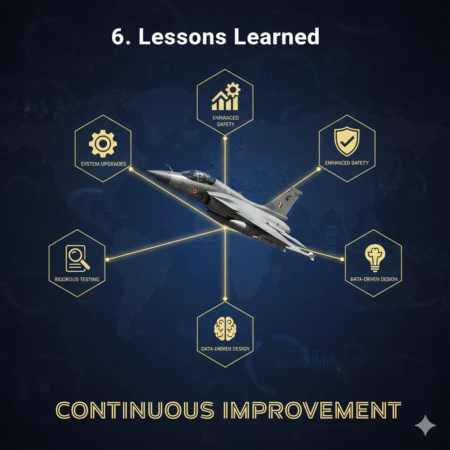
6. Lessons Learned
- Safety and Maintenance: Pre-flight checks and technical inspections are crucial.
- Pilot Training: Enhanced simulation of emergency scenarios is needed.
- Aircraft Upgrades: HAL continues to improve for better reliability and combat readiness.
- Operational Awareness: High-risk maneuvers in demonstrations must be carefully controlled.
7. Conclusion
The fighter jet crashes of 2024 and 2025 have highlighted both the promise and challenges of indigenous aircraft development.
- March 2024: Jaisalmer training crash – pilot safe, engine malfunction suspected.
- November 2025: Dubai Air Show crash – investigation ongoing, risk from aggressive maneuvers.
Despite these incidents, it remains India’s pride in aerospace technology, and continuous improvements in engineering, safety protocols, and pilot training ensure thatwill continue to serve as a cornerstone of the IAF.
These events also offer valuable lessons for future indigenous aircraft projects, emphasizing the importance of technical reliability, maintenance discipline, and operational training.
You may also like
___________________
Today’s Gold Price: Live Market Update & The Real Reasons Behind the Rise 2025