

Introduction:
Man has wanted to understand the universe for centuries. The universe contains billions and trillions of galaxies, stars, planets, and many other mysterious objects. When humans observe the universe, they discover many strange and surprising things that awaken curiosity and encourage further exploration. One of the most fascinating discoveries is our home galaxy, the Milky Way. The Milky Way is a vast system of stars, planets, dust, and gas, and it holds our solar system within it. Studying the Milky Way helps humans understand their place in the universe and inspires them to learn more about the wonders of space.
Table of Contents
milky way galaxy: our home in the beautiful universe on youtube
What Is the Milky Way Galaxy?
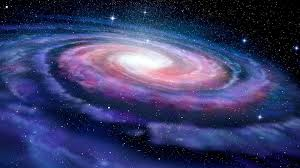
The Milky Way is a spiral galaxy that contains billions of stars, planets, gas clouds, dust, and dark matter. It appears as a faint, milky band of light across the night sky when viewed from Earth, which is how it got its name.
The Milky Way is not the only galaxy in the universe. Scientists believe there are hundreds of billions of galaxies, but the Milky Way is special because it is where our solar system exists. Every star we see in the night sky belongs to the Milky Way.
Discovery and Early Understanding
Long ago, people believed the Milky Way was a river of light or a path of gods. Ancient civilizations created myths and stories to explain it. The Greek philosopher Democritus suggested that the Milky Way was made of distant stars, but there was no way to prove it at that time.
In the 17th century, Galileo Galilei used a telescope and discovered that the Milky Way was made up of countless faint stars. This was a major breakthrough in understanding our galaxy. Over time, with better telescopes and technology, scientists began to realize that the Milky Way was not the entire universe but just one galaxy among many.
Shape and Structure of the Milky Way
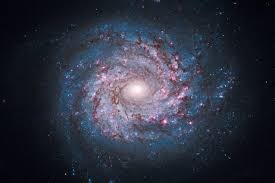
The Milky Way is a barred spiral galaxy, meaning it has a central bar-shaped region with spiral arms extending outward. It consists of several main parts:
1. Galactic Center
The center of the Milky Way is a dense region filled with stars, gas, and dust. At the very center lies a supermassive black hole called Sagittarius A*.
2. Spiral Arms
The Milky Way has several spiral arms that contain stars, planets, and nebulae. Our solar system is located in one of these arms called the Orion Arm.
3. Galactic Disk
The disk is a flat, rotating region where most of the stars and planets are found. The spiral arms are part of this disk.
4. Galactic Halo
The halo surrounds the galaxy and contains older stars and globular clusters. It also holds a large amount of dark matter.
Size of the Milky Way
The Milky Way is enormous. It is about 100,000 light-years in diameter, meaning light takes 100,000 years to travel from one end to the other. It contains an estimated 100–400 billion stars.
Our solar system is located about 27,000 light-years from the galactic center. Even at the speed of light, traveling across the Milky Way would take thousands of years.
Stars in the Milky Way
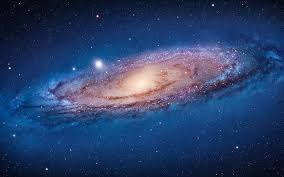
Stars are the building blocks of the galaxy. They vary in size, color, temperature, and age.
Types of Stars
- Red dwarfs – small and cool stars
- Yellow stars – like our Sun
- Blue giants – massive and very hot
- White dwarfs – dead stars
- Neutron stars – extremely dense remnants
Stars are born in nebulae, live for millions or billions of years, and eventually die, often in dramatic explosions called supernovae.
Planets and Solar Systems
Many stars in the Milky Way have planets orbiting them. These are called exoplanets. Scientists believe there are billions of planets in our galaxy alone.
Some planets are rocky like Earth, while others are gas giants like Jupiter. Many are located in the habitable zone, where liquid water may exist — a key ingredient for life.
Our Solar System in the Milky Way
Our solar system consists of the Sun, eight planets, moons, asteroids, and comets. Earth is the only known planet with life.
The solar system orbits the center of the Milky Way and takes about 225–250 million years to complete one full rotation. This period is called a galactic year.
The Black Hole at the Center
At the heart of the Milky Way lies a supermassive black hole named Sagittarius A*. It has a mass about 4 million times greater than the Sun.
Black holes have extremely strong gravity that even light cannot escape. Despite this, Sagittarius A* helps keep the galaxy stable by holding stars in orbit around the center.
Dark Matter and Dark Energy
Much of the Milky Way is made of dark matter, a mysterious substance that cannot be seen but has gravitational effects. Dark matter helps hold the galaxy together.
Dark energy is another unknown force believed to be responsible for the expansion of the universe. Both dark matter and dark energy play important roles in the structure and future of galaxies.
Formation of the Milky Way
Scientists believe the Milky Way formed about 13.6 billion years ago, shortly after the Big Bang. It grew over time by absorbing smaller galaxies and gas clouds.
Even today, the Milky Way continues to grow and change as stars are born and die.
Life in the Milky Way
One of the biggest questions is whether life exists elsewhere in the Milky Way. With billions of stars and planets, scientists believe life may exist somewhere.
Projects like SETI search for signals from intelligent civilizations, while space missions study planets that could support life.
The Milky Way and Other Galaxies
The Milky Way is part of the Local Group, which includes the Andromeda Galaxy and many smaller galaxies. Andromeda is moving toward the Milky Way, and they are expected to collide in about 4–5 billion years, forming a new galaxy.
Importance of Studying the Milky Way
Studying the Milky Way helps scientists:
- Understand galaxy formation
- Learn about star and planet evolution
- Search for life beyond Earth
- Discover the nature of dark matter
It also helps humans understand their place in the universe.
Future of the Milky Way
In the distant future, the Milky Way will merge with Andromeda. Stars will change orbits, but planets are unlikely to collide due to vast distances.
Over billions of years, stars will burn out, and the galaxy will slowly fade.
Conclusion
The Milky Way Galaxy is a magnificent and complex system that has fascinated humans for centuries. It is our cosmic home, containing billions of stars, planets, and mysteries yet to be discovered. From its spiral arms to its central black hole, the Milky Way teaches us about the universe and ourselves.
As technology advances, humans will continue to explore and understand this galaxy better. The Milky Way reminds us that while we are small, we are part of something vast, beautiful, and extraordinary.
_______________________
YOU MAY ALSO LIKE:
How Modern Technology is Transforming Pakistan: 16 Key Insights