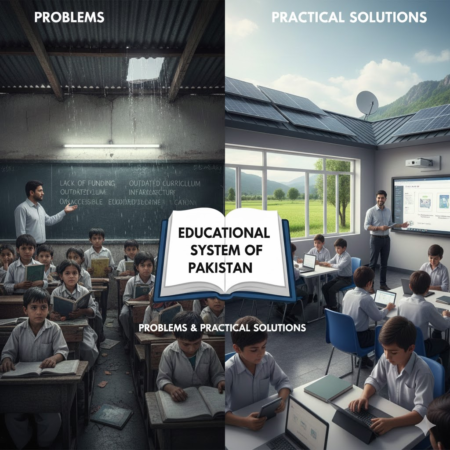
Educational System of Pakistan: Problems & Practical Solutions
Education is often called the foundation of a nation. It shapes minds, builds character, and prepares people to face future challenges. In Pakistan, education is considered very important, yet the country still struggles with many challenges. Millions of children are out of school, learning quality is low, and the system does not fully meet modern world needs. Despite these challenges, Pakistan’s education system holds great potential if proper reforms and practical actions are implemented.
Educational System of Pakistan Every year, children enter schools with big dreams, but many of those dreams fade because the system is not strong enough to support them. The problem is not just one issue—it is a mix of poor planning, outdated teaching methods, lack of resources, and social barriers. Understanding these problems is the first step toward real improvement.
Educational System of Pakistan: Problems & Practical Solutions on youtube
Educational System of Pakistan: Problems & Practical Solutions on Facebook
Table of Contents
The Divided Education System
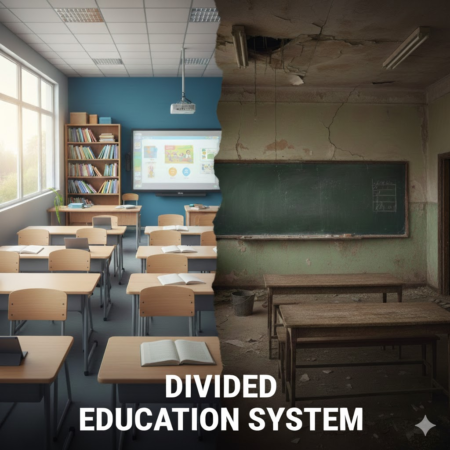
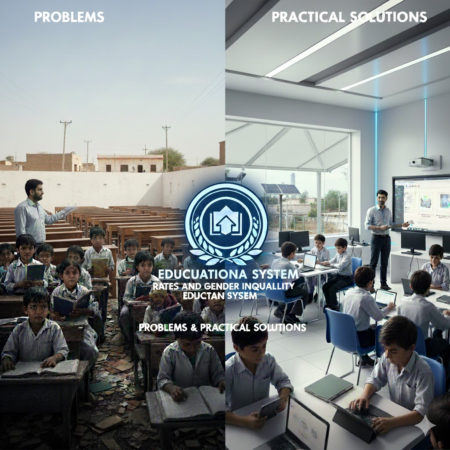
Educational System of Pakistan One of the major challenges is that Pakistan’s education system is divided into different streams. Government schools, private schools, and madrassas all follow different standards, curricula, and teaching methods. A child studying in a high-fee private school enjoys modern classrooms, English-medium instruction, and access to technology. Meanwhile, a government school student often struggles with overcrowded classrooms, lack of books, and poor infrastructure.
This divide creates social inequality from a young age. Students don’t start life on equal ground, affecting their confidence, career opportunities, and ability to compete. A nation cannot progress when its children do not receive equal opportunities to learn and grow.
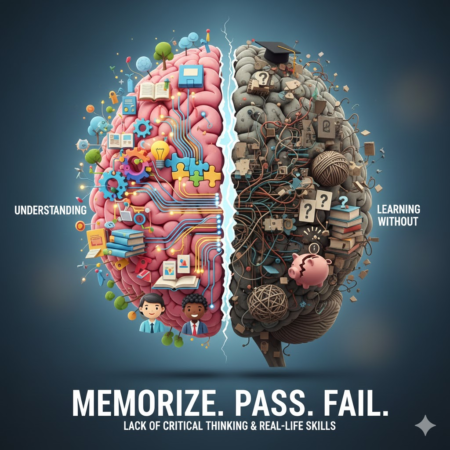
Learning Without Understanding
In many schools, education is still based on memorization. Students memorize textbooks to pass exams but fail to understand the concepts. This limits critical thinking, problem-solving, and communication skills. Students may graduate with degrees, but without real-life skills, many remain unemployed or underprepared for the modern workforce.
Challenges Faced by Teachers
Teachers are the heart of any education system, but in Pakistan, many teachers work under difficult conditions. Low salaries, lack of professional training, and no opportunities for growth reduce their effectiveness. Some teachers rely solely on textbooks and old methods, failing to inspire students. When teachers are untrained or demotivated, students lose interest in learning.
Outdated Curriculum
Educational System of Pakistan Pakistan’s curriculum focuses mostly on theory and ignores practical skills. Many subjects teach definitions rather than application. Modern topics like technology, artificial intelligence, digital literacy, and research skills are either missing or poorly implemented. Without updating the curriculum, students cannot compete in a globalized world.
Low Education Budget
Educational System of Pakistan spends a small percentage of its GDP on education. Due to limited funds, schools often lack basic facilities such as classrooms, labs, libraries, and clean environments. Teacher training and resources are minimal. Without proper investment, improving education is almost impossible.
High Dropout Rates and Gender Inequality
In rural areas, children often leave school early due to poverty, child labor, early marriages, or the absence of nearby schools. Girls face additional challenges because of cultural barriers, safety concerns, and financial constraints. This contributes to lower literacy rates among girls and limits women’s participation in the workforce, slowing national development.
Poor Infrastructure
Educational System of Pakistan Many government schools lack basic facilities: proper classrooms, clean drinking water, toilets, electricity, and internet access. Such conditions discourage students from attending school and hinder effective learning.
Examination System Problems
Pakistan’s exam system focuses heavily on marks rather than understanding. Students memorize answers for exams instead of learning concepts. Cheating, paper leaks, and high pressure are common. Exams should inspire learning and creativity, not fear.
Lack of Technical and Vocational Education
The system prioritizes academic degrees while ignoring practical and vocational skills. Many graduates remain unemployed because they lack skills needed in industries. Strengthening technical education can provide students with opportunities to earn, innovate, and contribute to national development.
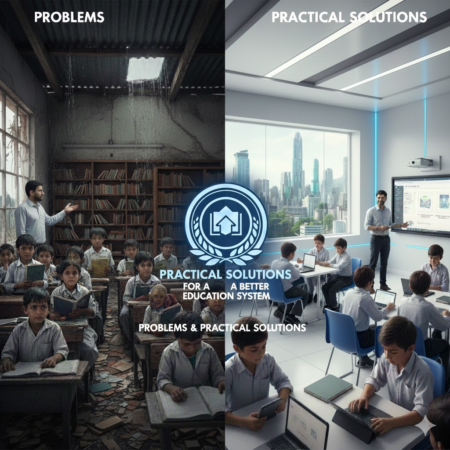
Practical Solutions for a Better Education System
Improving Pakistan’s education system requires realistic and actionable solutions:
- Uniform Education System
Educational System of Pakistan Create a standard system for all students, ensuring equal quality while balancing religious, scientific, and technical education. - Better Teacher Training and Salaries
Regular workshops, modern teaching methods, fair salaries, and performance-based incentives will motivate teachers and improve learning outcomes. - Updated Curriculum
Introduce practical subjects like computer literacy, AI basics, critical thinking, financial literacy, and environmental education to prepare students for real-life challenges. - Increased Education Budget
Build better infrastructure, provide technology and labs, and fund scholarships for poor students. Investment in education is a long-term investment in the nation. - Promote Girls’ Education
Educational System of Pakistan Provide scholarships, safe school environments, and awareness campaigns. Educated women contribute to educated families and stronger communities. - Reduce Dropout Rates
Offer free books, uniforms, midday meals, and financial support to make education accessible for everyone. - Improve Infrastructure
Ensure safe classrooms, clean water, toilets, electricity, and internet access to create a conducive learning environment. - Examination Reforms
Shift focus from memorization to concept-based learning. Include projects, continuous assessment, and practical tests. - Strengthen Technical and Vocational Education
Build technical institutes in every district and provide industry-linked skill development programs to reduce unemployment. - Use Technology in Education
Educational System of Pakistan Implement online classes, digital libraries, educational apps, and teacher-student portals to improve access, especially in remote areas.
Role of Parents, Society, Media, and NGOs
Education is not only the government’s responsibility. Parents should encourage learning at home, support children emotionally, and value education equally for boys and girls. Society must promote awareness, stop child labor, and support local schools. Media and NGOs can highlight issues, build schools, provide scholarships, and train teachers. Public-private partnerships can bring meaningful change.
The Future of Education in Pakistan
If Educational System of Pakistan implements these reforms seriously, the future can be bright. A skilled workforce, economic growth, reduced poverty, and social harmony are achievable. Education can transform Pakistan into a strong and developed nation. Investing in education today secures a brighter, stronger, and more stable future tomorrow.
You may also like
_______________
Businesses and Environmental Sustainability in Pakistan: Protecting Nature in 2026