
Gemini 2025: The Complete Guide to Google’s Multimodal AI
Introduction: The Dawn of Gemini 2025
Artificial Intelligence has evolved rapidly over the last decade, but few innovations have captured the world’s attention like Google’s Gemini. By 2025, Gemini has emerged not just as a conversational AI but as a multimodal powerhouse, capable of understanding and generating text, images, audio, video, and even code. This makes it a versatile tool for professionals, developers, creators, educators, and businesses alike.
What started as Bard in early 2023, a simple conversational AI powered by Google’s LaMDA framework, has now evolved into Gemini 3—a full-fledged ecosystem of AI capabilities, integrated into Google products like Search, Workspace, and Vertex AI.
In this comprehensive guide, we will explore Gemini’s history, technical architecture, applications, real-world use cases, ethical considerations, and future prospects. By the end, you’ll understand why Gemini 2025 is a milestone in the evolution of AI.
Table of Contents
Gemini 2025: The Complete Guide to Google’s Multimodal AI on youtube
Gemini 2025: The Complete Guide to Google’s Multimodal AI on Facebook
1. The Origins of Gemini
From Bard to Gemini
In February 2023, Google introduced Bard, a conversational AI built on the LaMDA framework (Language Model for Dialogue Applications). Bard’s goal was to provide natural, contextual responses rather than the standard keyword-based search results.
However, Bard was only the first step. By mid-2023, Google merged its AI research teams, Google Brain and DeepMind, creating a unified platform to accelerate AI development. This strategic consolidation laid the foundation for Gemini, a multimodal, general-purpose AI system capable of more than just conversation.
At the Google I/O conference on May 10, 2023, Gemini was formally announced as the successor to LaMDA and PaLM 2. Unlike Bard, Gemini was designed to process text, images, audio, video, and code, making it an ambitious competitor in the global AI landscape.2. Launch and Evolution of Gemini
2. Launch and Evolution of Gemini
Gemini 1.0 — December 2023
On 6 December 2023, Google launched Gemini 1.0, marking a significant step beyond conversational chatbots. It came in three variants:
- Gemini Nano: Lightweight AI for mobile and resource-constrained tasks.
- Gemini Pro: General-purpose model for writing, coding, summarizing, and reasoning.
- Gemini Ultra: High-performance variant for complex problem-solving and research (initially limited to partners and developers).
Gemini 1.5 — February 2024
Gemini 1.5 introduced enhanced reasoning, multimodal capabilities, and context memory, improving efficiency and interpretation of complex queries.
Gemini 2.0 Flash — December 2024
Gemini 2.0 Flash focused on speed, device optimization, and multimodal I/O, making it suitable for on-device processing and lightweight browser-based tasks.
Gemini 2.5 — March 2025
With Gemini 2.5, Google emphasized reasoning and logical thinking, enabling the AI to provide more accurate, insightful, and high-quality responses.
Gemini 3 (Gemini 2025) — November 2025
The latest milestone, Gemini 3, represents Google’s most intelligent and factually accurate AI system to date. Features include:
- Full multimodal reasoning (text, images, audio/video)
- Advanced coding & agentic programming
- Integration across Google Search, Workspace, Vertex AI, and AI Studio
- Enhanced context-awareness for professional workflows
Gemini 2025 is no longer just a language model—it is a versatile AI assistant for productivity, creativity, research, and development.
3. Technical Features of Gemini 2025
Multimodal Intelligence
Unlike earlier models, Gemini can understand and generate:
- Text: Summaries, essays, coding, creative writing
- Images: Visual content generation and editing
- Audio: Voice input recognition and audio synthesis
- Video: Analysis and content suggestions
- Code: Advanced programming support
Advanced Reasoning & Context Understanding
Gemini 3 is capable of:
- Long-context conversations
- Memory retention across sessions
- Problem-solving with logical reasoning
- Decision-making support in professional tasks
Agentic Coding
Gemini 2025 introduces agentic coding, allowing developers to collaborate with AI on complex programming tasks, including debugging, optimization, and full-stack solutions.
On-device Processing & Latency
Gemini can perform tasks locally on mobile devices, improving speed, security, and accessibility without relying entirely on cloud servers.
4. Architecture of Gemini 2025
Gemini builds upon:
- DeepMind + LaMDA + PaLM 2 foundations
- Multimodal neural network architectures
- Training on diverse datasets including text, images, and code
- Safety protocols for privacy, ethical use, and factual accuracy
The iterative design (1.0 → 1.5 → 2.0 → 2.5 → 3.0) ensures constant improvement in reasoning, efficiency, and multimodal performance.
5. Applications of Gemini 2025
Professional Productivity
- Drafting emails, reports, and presentations
- Data analysis and summarization
- Task automation and workflow optimization
Creative Industries
- Generating artwork, designs, and visual content
- Video and audio content creation
- Marketing materials and storytelling
Education & Learning
- AI tutoring for students
- Coding assistance
- Language translation and comprehension
Enterprise & Developer Tools
- Integrated into Google Workspace
- API access via Vertex AI
- Support for enterprise automation
6. Comparison with Other AI Models
| Feature | Gemini 2025 | GPT-5 | Claude | Copilot |
|---|---|---|---|---|
| Multimodal | ✅ Text, Image, Audio, Video, Code | ✅ Mostly text & code | ✅ Text + limited image | ✅ Code-focused |
| Reasoning | Advanced | Advanced | Moderate | Moderate |
| Integration | Google Ecosystem | OpenAI Ecosystem | Enterprise Tools | MS Tools |
| Accessibility | Mobile + Cloud | Cloud | Cloud | Cloud |
Gemini 2025 stands out for its multimodal intelligence, agentic coding, and integration into the Google ecosystem.
7. Historical Significance
- Rapid evolution: 2023 → 2025
- Shift from chatbot to multimodal AI
- Integration into daily professional workflows
- Strong AI competition with OpenAI, Anthropic, and Microsoft
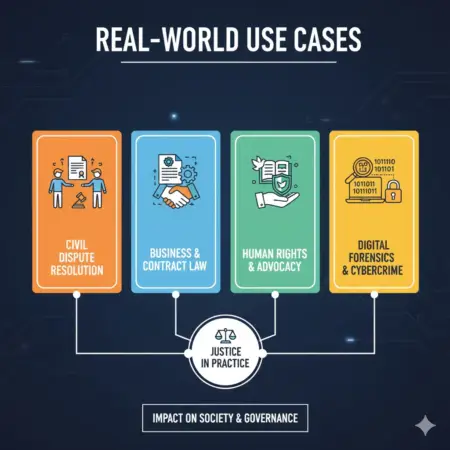
8. Real-World Use Cases
- Businesses: Automating marketing and analysis
- Developers: AI-assisted coding and debugging
- Content Creators: Writing, visual, and multimedia content
- Education: Personalized AI tutors for students
9. Ethical Considerations
- Accuracy & Hallucinations: Always verify AI output
- Privacy & Security: Avoid sensitive data in public AI systems
- Bias: Monitor outputs for fairness
- Responsible Use: Advocate ethical AI policies
10. Future Prospects
- Gemini 2026 & Beyond: Enhanced multimodal reasoning
- Integration with AR/VR, IoT, and robotics
- AI as everyday assistant in work and personal life
- Continuous updates for creativity, coding, and productivity
11. Timeline of Gemini 2025
| Date | Milestone |
|---|---|
| Feb 2023 | Bard launch (LaMDA) |
| May 2023 | Gemini announced |
| Dec 2023 | Gemini 1.0 launch |
| Feb 2024 | Gemini 1.5 (rebranding & improvements) |
| Dec 2024 | Gemini 2.0 Flash |
| Mar 2025 | Gemini 2.5 |
| Nov 2025 | Gemini 3 (Gemini 2025) |
Conclusion
Gemini 2025 represents a turning point in AI evolution. From Bard’s conversational roots to a fully multimodal, reasoning-focused system, Gemini exemplifies AI as a co-worker, tutor, creator, and developer assistant. Its integration into Google’s ecosystem makes it a daily tool for millions, while continuous updates push the boundaries of AI intelligence and versatility.
Gemini 2025 shows us that the future of AI is not just about automation, but about augmenting human creativity, productivity, and decision-making. Whether you’re a professional, a creator, a developer, or a student, understanding and leveraging Gemini 2025 is essential for staying ahead in a rapidly evolving digital world.
You may also like
______________
1. For a Transforming Future: The profound Importance of Teachers for Students