
In the rapidly evolving landscape of artificial intelligence, new platforms like Grok are capturing global attention. Marketed with a rebellious, “anti-woke” persona and boasting real-time access to information via X (formerly Twitter), Grok presents a unique proposition. For the world’s 1.9 billion Muslims, the emergence of any powerful new information tool prompts a critical question: How well does it serve our community? From a Muslim user’s perspective, Grok’s utility is a complex tapestry woven with threads of potential and significant caution, particularly when navigating the sensitive domains of Halal/Haram queries, Urdu language support, and the reliability of its Islamic content.

Table of Contents
The Halal/Haram Dilemma: A Tool, Not a Mufti
The most immediate and critical test for any AI from an Islamic standpoint is its handling of religious rulings, or fiqh. Questions about what is permissible (Halal) and forbidden (Haram) are not mere data points; they are matters of faith, practice, and spiritual consequence, traditionally reserved for qualified scholars (ulama).
Grok’s approach to these queries is fundamentally that of a large language model: it aggregates and synthesizes information from its vast training data. When asked a question like, “Is investing in cryptocurrency Halal?” or “What are the rules for modest dress?”, Grok will typically:
- Provide General Principles: It will often begin by outlining the core Islamic concepts involved, such as the prohibition of riba (usury) or the importance of haya (modesty).
- Present Multiple Opinions: It may present differing scholarly opinions on the matter, reflecting the diversity within Islamic jurisprudence (e.g., differences between the Hanafi and Shafi’i schools).
- Include a Disclaimer: Crucially, Grok frequently adds a disclaimer advising users to consult a qualified religious scholar for a definitive ruling (fatwa).
While this approach is intellectually honest and safer than making a definitive, unqualified claim, it reveals a fundamental limitation. An AI cannot possess the taqwa (God-consciousness), contextual understanding, and spiritual authority of a human scholar. For Muslims, Grok should be viewed as a starting point for research—a tool to understand the parameters of a debate—but never as a substitute for a trusted mufti or scholar.

Bridging the Language Gap: Urdu Support and Its Nuances
A significant portion of the global Muslim Ummah communicates in Urdu. Grok’s multilingual capabilities, including its support for Urdu, are therefore a notable feature. For many users in Pakistan, India, and diaspora communities, the ability to ask questions in their native tongue is a major advantage.
However, the depth of this support is a key consideration. While Grok can understand and generate text in Urdu, its grasp of the language’s profound religious and poetic heritage may be superficial. Islamic terminology in Urdu is rich with specific connotations that can be lost in translation or in an AI’s pattern-matching process. Furthermore, Grok may struggle to appreciate the regional cultural variations in how Islam is practiced and understood across the Urdu-speaking world. The tool is functional for basic communication but may lack the finesse required for deep, nuanced theological discussions in Urdu.

Reliability of Islamic Content: The Challenge of Authenticity
Beyond direct rulings, the general reliability of Grok’s Islamic content is a mixed bag. As an AI trained on the internet, it has absorbed a vast spectrum of information—from authentic academic sources and reputable Islamic websites to fringe interpretations, polemical blogs, and misinformation.
This presents a significant challenge for the Muslim user. Grok might accurately state the five pillars of Islam but then present a minority or even incorrect view on a historical event as if it were mainstream. It may not adequately distinguish between established scholarly consensus (ijma) and a solitary, outlier opinion. The “anti-woke” design philosophy of Grok, which aims to avoid perceived censorship, could also mean it is more likely to present controversial or fringe theories without sufficient context or warning.
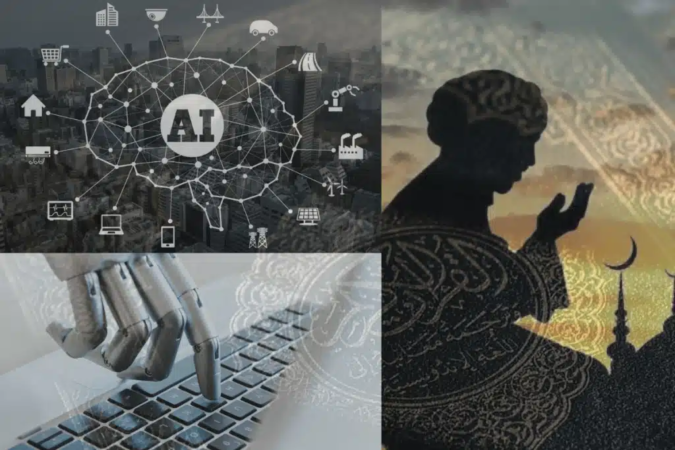
For a user seeking to strengthen their faith and knowledge, this necessitates a high degree of digital literacy and, more importantly, Islamic literacy. Verifying Grok’s information against established sources—the Quran, authentic Hadith collections, and works of recognized scholars—is not just recommended; it is essential.
Conclusion: A Cautious Embrace of a Powerful Tool
Grok is undeniably a powerful and innovative piece of technology. For the Muslim user, it offers potential as a research assistant, a language bridge, and a gateway to general information. However, its limitations in the sacred sphere of religious knowledge are profound.
The path forward is one of cautious engagement. Muslim users should leverage Grok’s strengths while remaining vigilant about its weaknesses. Use it to draft an email, translate a phrase, or get a summary of a news event. But when it comes to matters of aqidah (creed), ibadah (worship), and mu’amalat (interpersonal transactions), the timeless wisdom of the human scholar remains irreplaceable.
In the end, Grok is a mirror reflecting the vast, often contradictory, expanse of human knowledge online. It is our responsibility as believers to approach that reflection with discernment, grounding ourselves in the authentic, unbroken chain of Islamic scholarship that has guided our community for centuries. AI can inform, but it is faith and scholarship that truly transform.
______________________
YOU MAY ALSO LIKE: