
How Pakistan’s Legal System Works: History, Courts, and Laws Explained
How Pakistan’s Legal System Works
Pakistan’s legal system is unique because it is a blend of different legal traditions. It draws from the British common law system, Islamic principles, the Constitution, judicial precedents, and modern statutory laws. This combination gives Pakistan a legal system that is flexible, rich, and adaptable.
Understanding it fully requires looking at its history, how it works today, sources of law, court structures, and how it has evolved over time. Here’s a detailed explanation in simple, human-friendly language.
Table of Contents
How Pakistan’s Legal System Works: History, Courts, and Laws Explained on youtube
How Pakistan’s Legal System Works: History, Courts, and Laws Explained on Facebook
Historical Roots of Pakistan’s Legal System
British Colonial Influence
Before 1947, the area that is now Pakistan was part of British India. The British introduced their legal system, including courts, procedures, and administrative structures. They also brought English common law principles that were applied alongside local laws.
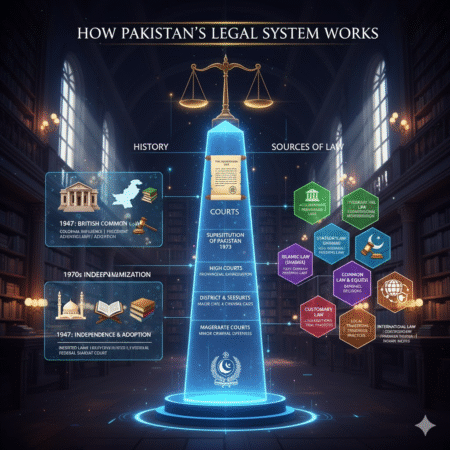
How Pakistan’s Legal System Works key laws inherited from the British include:
- Penal Code (1860): Defined criminal offenses and punishments.
- Evidence Act (1872): Explained what counts as valid evidence in court.
- Criminal Procedure Code (1898): Set out procedures for criminal cases.
How Pakistan’s Legal System Works After Pakistan’s independence in 1947, these laws were retained to ensure stability and continuity, allowing the new country to function without legal chaos.
Why Pakistan Retained Common Law
After independence, Pakistan faced the challenge of building a legal system from scratch. Immediate creation of a fully Islamic legal system was impossible. Common law was retained because:
- Stability in administration: Courts and government offices already knew the system.
- Trained personnel: Judges, lawyers, and civil servants were familiar with British legal principles.
- Modern laws in place: Criminal, civil, and property laws were already codified.
- Time constraints: Pakistan needed continuity for governance and justice.
Over time, How Pakistan’s Legal System Works in Islamic laws were added gradually, giving Pakistan a system that is both functional and culturally Islamic.
Early Legal Structure in Pakistan
How Pakistan’s Legal System Works Initially, Pakistan adopted the Government of India Act 1935 as its constitutional framework. The first Constitution (1956) later formalized the legal system. Many British-era laws remained, but amendments were made to reflect Islamic identity and modern needs.
For example:
- Criminal laws continued under the Penal Code, while
- Hudood Ordinances introduced Islamic punishments for certain crimes, and
- Family laws were revised to align with Islamic principles.
This phase established the foundation for Pakistan’s hybrid legal system.
Islamic Influence on Pakistan’s Legal System
How Pakistan’s Legal System Works that Pakistan is an Islamic Republic, and Islam significantly influences its laws. The Constitution ensures that no law contradicts Islamic teachings, creating a unique blend of common law and Islamic principles.
Sources of Islamic Law
Islamic law in Pakistan comes from:
- The Quran – The primary source of guidance.
- The Sunnah (Prophetic traditions) – Practices and sayings of Prophet Muhammad ﷺ.
- Fiqh (Islamic jurisprudence) – Scholarly interpretations of Islamic law.
- Islamic ordinances – Laws introduced to align Pakistan’s legal system with Islam.
Examples:
- Hudood Ordinances: Islamic punishments for theft or adultery.
- Qisas and Diyat laws: Compensation and retribution for murder or injury.
Federal Shariat Court
Established in 1980, the Federal Shariat Court ensures laws comply with Islam. It can recommend changes or strike down laws that contradict Islamic principles.
Example:How Pakistan’s Legal System Works in The court reviewed interest-based banking laws to align with Sharia.
This court helps maintain a balance between Islamic law and common law, a feature unique to Pakistan.
Balancing Islamic and Common Law
- Criminal law: Mostly common law, with Islamic punishments in some cases.
- Family law: Governed mainly by Islamic principles.
- Business law: Primarily common law, with growing adoption of Islamic finance.
- Judicial interpretation: Courts integrate both systems for complex cases like cybercrime or corporate disputes.

Pakistan’s Court System
Pakistan’s courts are structured to handle various legal matters effectively.
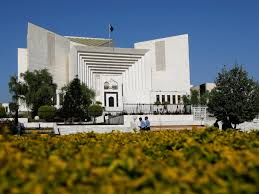
1. Supreme Court of Pakistan
The Supreme Court is the highest judicial authority. It:
- Reviews laws and government actions for constitutional compliance.
- Protects citizens’ fundamental rights.
- Hears appeals from High Courts.
- Advises the government on legal matters.
Example: How Pakistan’s Legal System Works in Landmark rulings have protected human rights, struck down unconstitutional laws, and resolved federal-provincial disputes.
2. High Courts
There are five High Courts: Lahore, Sindh, Peshawar, Balochistan, and Islamabad.
High Courts:
- Hear appeals from lower courts.
- Handle constitutional petitions.
- Supervise district courts.
Their judgments guide lower courts, ensuring legal consistency.
3. Federal Shariat Court
This court ensures laws comply with Islamic principles. It reviews:
- Criminal laws
- Family laws
- Financial regulations
It can recommend amendments or annul laws, keeping the legal system aligned with Islam.
4. District and Special Courts
Lower courts handle everyday cases:
- District Courts: Civil and criminal matters
- Magistrate Courts: Minor criminal cases
- Family Courts: Marriage, divorce, inheritance
- Anti-Terrorism Courts: Terrorism-related cases
- Banking and Consumer Courts: Financial disputes
District courts are the first contact point for most citizens.
5. Legal Procedures
Legal processes are guided by:
- Civil Procedure Code (CPC) – Civil case handling
- Criminal Procedure Code (CrPC) – Criminal case handling
- Evidence Act – Validity and use of evidence
These procedures ensure fairness, consistency, and transparency.
Sources of Law in Pakistan
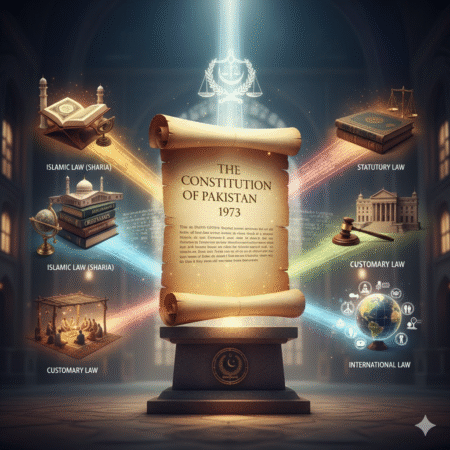
Pakistan’s laws come from multiple sources:
- Constitution: Supreme law of the land.
- Legislation: Laws passed by National and Provincial Assemblies.
- Ordinances: Temporary laws issued by President or governors.
- Judicial Precedents: Court decisions guide future rulings.
- Islamic Law: Family, criminal, and financial laws.
- Customary Law: Local customs (adat) recognized in tribal areas.
Example: How Pakistan’s Legal System Works In rural regions, inheritance disputes may follow local customs alongside formal legal rules.
Evolution of Pakistan’s Legal System
Phase 1: Retention (1947–1956)
- British laws retained for stability.
- Penal Code, Evidence Act, CrPC continued with minor amendments.
Phase 2: Nation-Building (1956–1971)
- First constitution introduced fundamental rights.
- Focused on creating a distinct legal identity while keeping British structures.
Phase 3: Islamization (1977–1990)
- Hudood Ordinances and Qisas & Diyat laws introduced.
- Islamic principles integrated into criminal and family law.
Phase 4: Judicial Activism (1990–2013)
- Courts actively protected citizens’ rights.
- Landmark cases addressed corruption, environmental protection, and media freedom.
Phase 5: Modernization (2013–Present)
- Focus on technology, cybercrime, corporate law, and human rights.
- Courts adopt digital tools for faster case management.
Strengths of Pakistan’s Legal System
- Independent judiciary
- Flexible through judicial precedents
- Protection of fundamental rights
- Checks and balances
- Compatible with global systems
- Integrated Islamic values
- Structured court hierarchy
- Opportunities for reform
Weaknesses and Challenges
- Case backlog and delays
- Complex procedures
- Variations in lower court rulings
- Balancing Islamic and common law
- Corruption in some areas
- Limited public legal awareness
- Need for digital transformation
- Political and social pressure on courts
Conclusion
How Pakistan’s Legal System Works is a unique blend of history, tradition, and modernity. From its British common law roots to the integration of Islamic principles, it has evolved to serve the needs of a diverse population.
Key points to remember:
- Historical foundation matters: British-era laws provided stability and a working framework after independence.
- Islamic influence shapes culture: Family law, inheritance, and certain criminal laws reflect the country’s Islamic identity.
- Structured courts ensure justice: From district courts to the Supreme Court, each level has a clear role in maintaining fairness and order.
- Multiple sources of law coexist: Constitution, legislation, judicial precedents, Islamic law, and local customs all work together.
- Evolution is continuous: Over time, Pakistan’s legal system has adapted to political changes, societal needs, and modern challenges.
Pakistan’s legal system is flexible, adaptive, and culturally rooted, providing a foundation for justice and governance. It sets the stage for understanding real-life cases, reforms, and citizen engagement.
You may also like
________________
Central Superior Services (CSS) – History, Importance, and Role in Pakistan’s Development