
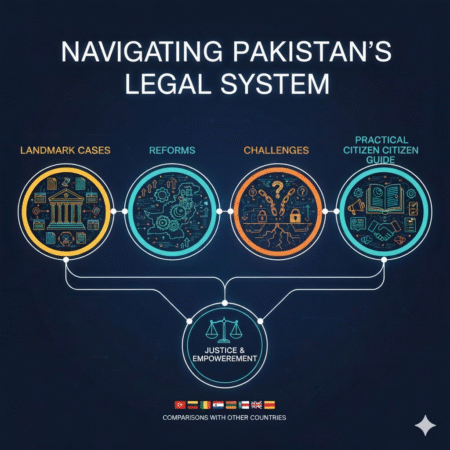
Navigating Pakistan’s Legal System: Landmark Cases, Reforms, Challenges, and Practical Citizen Guide
Navigating Pakistan’s Legal System in Pakistan’s legal system is dynamic, practical, and citizen-focused. It is shaped by real-life cases, judicial decisions, reforms, comparisons with other countries, and practical guidance for citizens. Understanding these aspects is essential for anyone who wants to navigate the law effectively and protect their rights according to Navigating Pakistan’s Legal System.
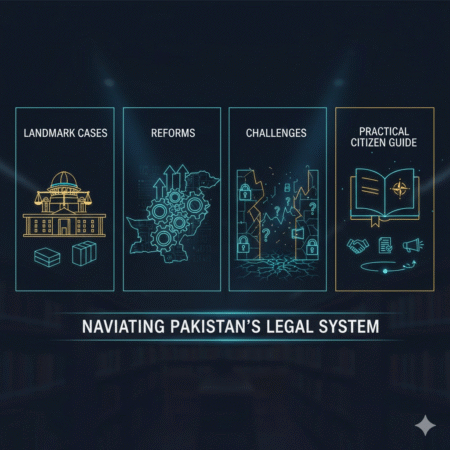
Table of Contents
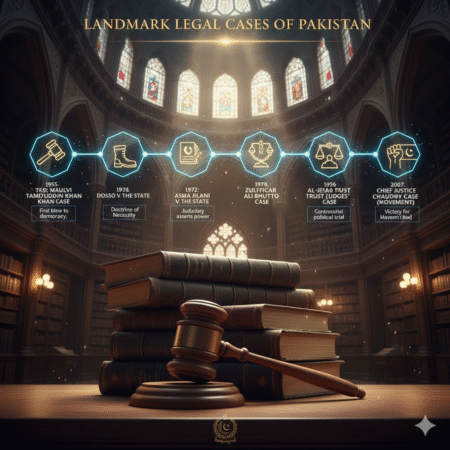
1. Landmark Cases in Pakistan
State vs. Ziauddin (Family Law Case)
- Dispute over inheritance and marriage rights.
- Court applied Islamic principles for inheritance while using common law procedures.
- Outcome:Navigating Pakistan’s Legal System Demonstrates how Pakistan’s courts balance religion and modern legal systems.
Benazir Bhutto vs. Government (Political and Constitutional Case)
- Benazir Bhutto challenged government actions claimed unconstitutional.
- Supreme Court intervened to protect citizens’ rights and uphold the Constitution.
- Significance: Shows the judiciary’s role as a check on government power.
Shehla Zia vs. WAPDA (Environmental Case)
- Petition regarding environmental hazards from electricity installations.
- Court ruled environmental protection is a fundamental right.
- Significance: Set a precedent for environmental law in Pakistan.
Asghar Khan Case (Accountability Case)
- Focused on misuse of state resources during elections.
- Supreme Court enforced accountability, showing judicial activism.
Cyber Crime Cases (Modern Era)
- Courts handle online harassment, fraud, and cybercrime.
- Evidence includes emails, chat logs, and social media content.
- Outcome: Shows Pakistan’s legal system adapts to modern technological challenges.
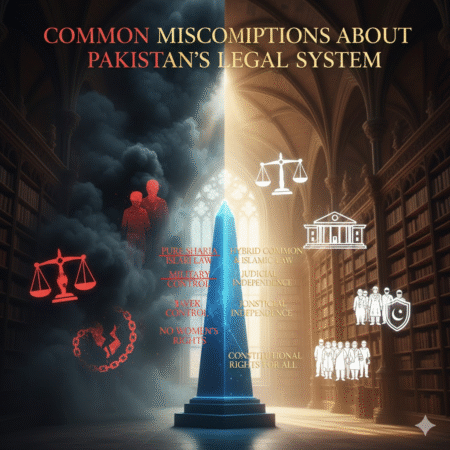
2. Common Misconceptions About Pakistan’s Legal System
- Only Islamic law is used – In reality, common law and Islamic law coexist.
- Courts always take too long – Fast-track courts and digital systems reduce delays.
- Only lawyers can understand the law – Legal aid and public awareness make it accessible.
- Judges follow only one system – Judges integrate common law and Islamic principles.
- Laws are rigid – Continuous amendments and judicial precedents provide flexibility.
3. Future Reforms and Modernization
Digital Transformation
- E-filing, online hearings, and digital case management increase speed and transparency.
Legal Education
- Training judges and lawyers improves handling of complex modern cases.
Access to Justice
- Legal aid and awareness programs help poor and marginalized citizens.
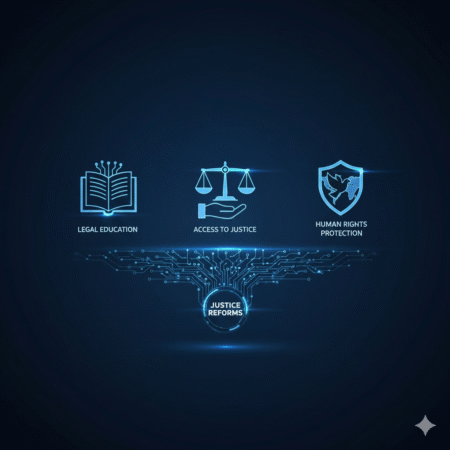
Human Rights Protection
- Emphasis on women’s rights, minority rights, and freedom of speech.
Corporate and Technology Laws
- Cybercrime, e-commerce, and digital banking laws adapt to modern society.
Balancing Islamic and Common Law
- Ongoing efforts ensure fair application of both systems.
4. Comparisons With Other Countries
Pakistan vs. India
- Both inherited British common law.
- Pakistan integrates Islamic law extensively; India is more secular.
- Lesson: Religion can coexist with modern legal principles.
Pakistan vs. UK
- UK is the origin of common law; Pakistan retained structures but added Islamic courts.
- Lesson: Legal systems can be adapted to culture and religion.

Pakistan vs. USA
- US: Secular, with common and constitutional law.
- Pakistan: Combines common law with Islamic principles.
- Lesson: Dual legal systems can operate effectively together.
Pakistan vs. Middle East
- Middle East: Primarily Sharia-based.
- Pakistan: Hybrid system with structured courts, compatible with global legal practices.
5. Key Challenges Facing Pakistan’s Legal System
- Backlog of Cases – Millions pending cause delays.
- Public Awareness – Many citizens don’t know their legal rights.
- Judicial Transparency – Some rulings lack transparency.
- Balancing Dual Systems – Conflicts may arise between common law and Islamic law.
- Corruption and Influence – Political pressures affect certain courts.
- Technological Demands – Cybercrime and digital commerce require modern laws.
6. Lessons from Pakistan’s Legal System
- Adaptation is Key – Successfully blends British law, Islamic law, and modern needs.
- Judicial Activism Protects Rights – Courts act as a check on government overreach.
- Legal Education Matters – Skilled judges and lawyers ensure justice.
- Public Participation Improves Law – Awareness campaigns empower citizens.
- Modernization Ensures Relevance – Digital tools help keep pace with global challenges.
- Cultural Identity Preserved – Islamic law integration balances tradition and progress by Navigating Pakistan’s Legal System.

7. Practical Advice for Citizens
Know Your Rights
Understanding your rights is the first and most important step in navigating Pakistan’s legal system. Every citizen should be aware that the Constitution of Pakistan guarantees a wide range of fundamental rights, and these rights apply to all individuals regardless of gender, religion, or social status.
1. Right to Life and Personal Liberty
- Every individual has the right to life, liberty, and security.
- The state cannot arbitrarily take away your freedom without proper legal procedures.
- Practical Tip: If someone threatens your life or unlawfully confines you, you can approach the police or file a petition in court to protect yourself.
2. Right to Equality
- All citizens are equal before the law.
- Discrimination based on gender, religion, caste, or social status is illegal.
- Example: Women in workplaces or educational institutions cannot be treated unfairly; minorities cannot be denied basic services.
3. Freedom of Expression
- Citizens have the right to express their opinions freely, including writing, speaking, or participating in peaceful assemblies.
- This right is protected by the Constitution, but it must be exercised responsibly without inciting violence or hatred.
4. Right to Education
- Navigating Pakistan’s Legal System Every child has the right to free and compulsory education.
- Citizens can demand that the government provide schools and learning facilities, especially in underprivileged areas.
5. Right to Property
- Individuals have the right to own, use, and transfer property legally.
- No one can seize your property without due legal process.
- Practical Tip: Keep all property documents, deeds, and agreements safe for protection in case of disputes.
6. Right to Justice
- Every citizen has the right to fair and speedy trial.
- Courts must provide an opportunity to present your case fully and protect you from unjust treatment.
- Example: If you face harassment, fraud, or unlawful detention, the court can intervene and ensure justice.
7. Right to Privacy
- Navigating Pakistan’s Legal System Citizens have the right to personal and family privacy.
- Illegal intrusion into your home, communication, or personal life can be challenged legally.
8. Right to Access Information
- Citizens can access government records, policies, and decisions under the Right to Information laws.
- This helps in holding authorities accountable and staying informed about your rights and obligations.
Practical Tips to Protect Your Rights:
- Learn and Understand Your Rights: Attend workshops, read guides, or consult legal aid centers.
- Document Everything: Keep records of incidents, agreements, or communications.
- Seek Legal Help Early: Consulting a lawyer can prevent escalation of disputes.
- Use Mediation When Possible: Many disputes, especially family or property issues, can be resolved outside court.
- Report Violations: If your rights are violated, approach authorities or file petitions in court.
Understanding your rights is empowering. It gives you the knowledge and confidence to protect yourself, resolve disputes, and engage actively in society. Being aware of your rights is the foundation for justice, fairness, and equality in Pakistan.
- Constitution guarantees freedom of speech, protection from discrimination, and fair trial.
Understand Court Hierarchy (Expanded Version)
Navigating Pakistan’s Legal System Knowing the court hierarchy is essential for anyone who wants to navigate Pakistan’s legal system efficiently. Each level of court has specific responsibilities, authority, and procedures, and understanding them can save time, money, and frustration.
1. District Courts
- Role: Handle the majority of civil and criminal cases at the local level.
- Types of Cases: Property disputes, civil suits, minor criminal offenses, family matters, and local business conflicts.
- Practical Tip: Most legal matters begin here. Always identify the correct district court based on your city or region.
2. High Courts
- Role: Serve as appellate courts for decisions made in district courts.
- Authority: Can review lower court decisions, ensure justice is served, and interpret constitutional matters.
- Types of Cases: Appeals in civil and criminal cases, petitions for enforcement of fundamental rights, and constitutional challenges.
- Example: Navigating Pakistan’s Legal System If a district court dismisses your case unfairly, you can appeal to the High Court for reconsideration.
3. Supreme Court of Pakistan
- Role: The highest judicial authority in the country.
- Authority: Final appellate court, guardian of the Constitution, and protector of citizens’ rights.
- Types of Cases: Major constitutional cases, federal disputes, human rights issues, and landmark cases affecting national policy.
- Example:Navigating Pakistan’s Legal System Cases like Benazir Bhutto vs. Government and Asghar Khan Case reached the Supreme Court because of their national significance.
4. Special Courts and Tribunals
- Purpose: Navigating Pakistan’s Legal System Handle specific types of cases requiring expert knowledge or speedy resolution.
- Examples:
- Family Courts → Marriage, divorce, child custody
- Anti-Terrorism Courts → Terrorism-related offenses
- Banking Courts → Financial disputes and banking fraud
- Environmental Tribunals → Pollution and environmental violations
- Practical Tip: Navigating Pakistan’s Legal System Approach these courts directly for specialized issues instead of filing in regular courts.
5. Key Takeaways About Court Hierarchy
- Start at the appropriate level: Filing in the wrong court can delay justice.
- Understand appeals process: You can move from lower courts to higher courts if dissatisfied with a ruling.
- Know your case type: Civil, criminal, family, corporate, or constitutional matters may have different courts.
- Documentation is crucial: Courts rely heavily on records, evidence, and legal documents.
- Legal representation matters: Hiring a lawyer who understands the hierarchy helps avoid mistakes and strengthens your case.
Practical Example: Navigating a Property Dispute
- File the case at the District Court where the property is located.
- If dissatisfied with the judgment, appeal to the High Court of that province.
- For constitutional or landmark issues, the case may eventually reach the Supreme Court.
- If it’s a financial dispute, it could be referred to a Banking Court for expert judgment.
Navigating Pakistan’s Legal System Understanding the court hierarchy empowers citizens to take informed legal action, avoid unnecessary delays, and exercise their rights effectively. It also demonstrates that Pakistan’s legal system is well-structured, organized, and accessible for those who understand its layers.
- District Courts → High Courts → Supreme Court → Special Courts
- Knowing the right court saves time and effort.
Legal Representation
- Hire a lawyer or use legal aid services.
- Choose someone familiar with local customs and precedents.
Documentation
- Keep contracts, property documents, marriage papers, and official notices organized.
Legal Awareness Programs
- Legal aid centers, workshops, seminars, and online resources improve citizen knowledge.
Example: Workshops teach citizens how to file complaints against workplace harassment.
Handling Disputes
- Stay calm, consult a lawyer, follow procedures, consider mediation, and document everything.
Role of Technology
- E-filing, digital records, virtual hearings, and legal databases simplify processes.
- Example: During COVID-19, virtual hearings proved effective.
Understanding Islamic Law
- Affects marriage, divorce, inheritance, and banking.
- Citizens benefit from workshops or legal aid programs to learn basic principles.
Civic Responsibility
- Navigating Pakistan’s Legal System Following laws, paying taxes, reporting crimes, and respecting regulations strengthen governance.
- Example: Communities aware of environmental regulations prevent illegal construction or pollution.
Pakistan’s legal system is robust, adaptable, and citizen-focused. It balances:
- British common law – structure and stability
- Islamic law – cultural and religious relevance
- Constitution – protection of citizens’ rights
- Judicial precedents – flexibility and adaptation
Navigating Pakistan’s Legal System Despite challenges such as delays in court proceedings, occasional corruption, and the increasing demands of modern technology, Pakistan’s legal system continues to demonstrate remarkable resilience and adaptability. Over the years,Navigating Pakistan’s Legal System courts and lawmakers have introduced reforms, digitalization, and public awareness programs that not only enhance efficiency but also ensure that justice remains accessible, fair, and practical for every citizen.
Navigating Pakistan’s Legal System in digital transformation of courts—through online case filing, virtual hearings, and digital record-keeping—has significantly reduced the time and effort required to handle cases. Meanwhile, Navigating Pakistan’s Legal System legal awareness campaigns, workshops, and accessible resources empower citizens to understand their rights and obligations, making the system more transparent and citizen-friendly.
By studying real-life cases, Navigating Pakistan’s Legal System citizens can see how the legal framework operates in practical scenarios, learning important lessons about accountability, fairness, and the balance between Islamic law and common law. Comparisons with other countries highlight how Pakistan’s system has adapted global legal principles while preserving cultural and religious values, making it unique and functional.
Conclusion
Moreover, practical guidance—such as understanding the court hierarchy, knowing your rights, proper documentation, and seeking legal representation—enables citizens to navigate the system confidently. This knowledge helps individuals protect themselves, resolve disputes effectively, and participate actively in civic life, contributing to a stronger and more just society.

Navigating Pakistan’s Legal System In essence, Pakistan’s legal system is not just a set of rules on paper; it is a living framework designed to serve citizens, uphold justice, and evolve with societal needs. With continued reforms, technological integration, and growing public awareness, it is poised to meet the challenges of the 21st century while maintaining fairness, transparency, and accessibility for all in Navigating Pakistan’s Legal System .
By understanding the Navigating Pakistan’s Legal System interplay of historical foundations, landmark cases, reforms, and practical citizen guidance, every individual can play a role in strengthening the legal system, ensuring that Pakistan remains a country where justice is not only a principle but a lived reality.
You may also like
_____________
How Pakistan’s Legal System Works: History, Courts, and Laws Explained