

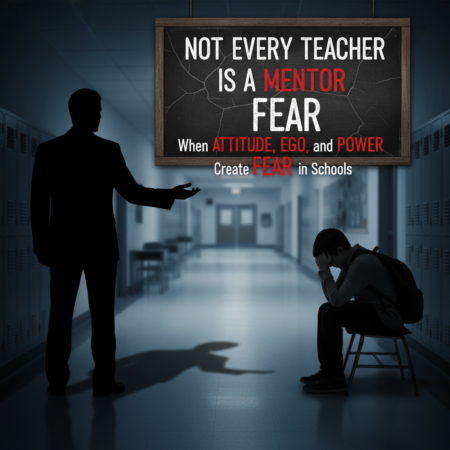
Education is meant to be a sacred process—one that shapes minds, builds character, and prepares young individuals for life. Teachers are entrusted with this responsibility because they are expected to guide, nurture, and inspire. However, reality does not always align with this ideal. Not every teacher becomes a mentor. Some, due to their attitude, ego, and misuse of authority, become a source of fear, conflict, and injustice within the school environment.
One of the most damaging manifestations of this problem appears when a teacher’s negative behavior becomes entangled with school politics—especially when it involves the children of the principal. In such cases, personal ego and attitude replaces professionalism, and classrooms turn into attitude battlegrounds of power rather than spaces of learning.
Table of Contents
1. Not Every Teacher Is a Mentor: When Attitude, Ego, and Power Create Fear in Schools on youtube
The Role of a Teacher: Responsibility Beyond the Syllabus
A teacher’s role goes far beyond completing a syllabus or preparing students for exams. Teachers are role models. Their tone, behavior, fairness, attitude and emotional intelligence deeply influence students’ mental and emotional development.
A true mentor-teacher:
- Treats all students equally
- Maintains professional boundaries
- Handles conflicts privately and respectfully
- Encourages growth rather than fear
Unfortunately, when teachers lack emotional maturity, they may begin to misuse their authority, allowing ego and attitude resentment to guide their actions.
Understanding Teacher Attitude: When Authority Turns Toxic
Teacher attitude plays a critical role in shaping classroom culture. A positive attitude creates an environment of trust, while a negative one creates fear and silence.
Some teachers develop an aggressive or arrogant attitude due to:
- Insecurity about their position
- Desire for control and dominance
- Frustration with management
- Lack of accountability
- Personal issues carried into professional life
When such teachers enter the classroom, students sense tension immediately. The teacher may appear strict, but beneath that strictness often lies ego rather than discipline.
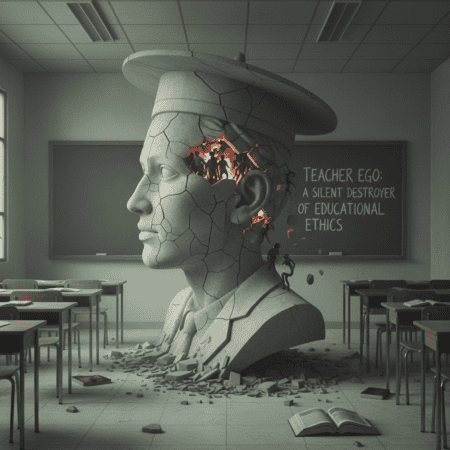
Teacher Ego: A Silent Destroyer of Educational Ethics
Ego is one of the most dangerous traits in an educator. When a teacher believes they are always right and beyond question, learning suffers.
Signs of ego-driven teaching include:
- Refusing to accept mistakes
- Taking student questions as personal challenges
- Publicly humiliating students
- Holding grudges
- Using fear as a teaching tool
An ego-driven teacher does not correct students to help them improve but to assert superiority. This attitude is especially harmful when power dynamics with school leadership come into play.
Principal’s Children in the Classroom: A Sensitive Reality
In many schools, the principal’s children study in the same institution. This situation requires extra professionalism and neutrality from teachers. Sadly, this is where some teachers fail.
Instead of maintaining fairness, some teachers:
- Feel threatened by the principal’s authority
- Develop resentment toward the principal
- Transfer this resentment onto the principal’s children
This behavior is unethical and deeply damaging.
Biased Treatment of Principal’s Children
Some teachers consciously or unconsciously treat the principal’s children differently. This treatment can appear in two harmful forms:
1. Excessive Strictness
Teachers may:
- Over-punish minor mistakes
- Publicly criticize the child
- Deny basic leniency given to others
This is often done to show “power” or independence from administration.
2. Targeted Negativity
Teachers may:
- Label the child as “problematic”
- Assume bad intentions
- Interpret normal behavior as misconduct
In both cases, the child becomes a victim of adult ego conflicts.
Spreading Complaints Across the School
One of the most unprofessional behaviors is when teachers spread complaints about the principal’s children throughout the school.
Instead of following proper channels, some teachers:
- Talk negatively in staff rooms
- Share complaints with other teachers
- Discuss the child in front of students
- Create a negative reputation for the child
This gossip culture poisons the school environment and isolates the student socially and emotionally.
The Psychological Impact on the Child
Children who are constantly targeted or talked about suffer deeply.
Common effects include:
- Anxiety and fear
- Loss of self-confidence
- Academic decline
- Social withdrawal
- Emotional distress
The child may begin to feel punished not for their actions, but for their identity—simply because they are the principal’s child.
Impact on Other Students
When students observe unfair treatment, they learn the wrong lessons:
- That power matters more than justice
- That authority can be misused
- That silence is safer than honesty
This creates a culture of fear, where students focus on survival rather than learning.
Damage to the School’s Moral Environment
A school where teachers gossip, target students, and act on ego slowly loses its ethical foundation.
Consequences include:
- Breakdown of trust
- Increased conflicts
- Toxic staff relationships
- Decline in educational quality
Education cannot thrive in an environment poisoned by personal grudges.

Professional Ethics: What Teachers Must Remember
Teachers are professionals, not political players. Ethical teaching demands:
- Fairness regardless of background
- Confidential handling of complaints
- Respectful communication
- Emotional self-control
No child should suffer because of adult conflicts.
The Principal’s Responsibility
Principals also play a key role. They must:
- Ensure fair treatment of all students
- Address teacher misconduct objectively
- Avoid defensiveness regarding their own children
- Establish clear complaint procedures
Transparency protects both students and staff.
Healthy Ways to Handle Complaints
If a teacher has a genuine concern:
- It should be documented
- Discussed privately with administration
- Kept confidential
- Addressed with the child respectfully
Public shaming is never acceptable.
Training Teachers in Emotional Intelligence
Modern education demands emotionally intelligent teachers.
Training should include:
- Child psychology
- Conflict resolution
- Ethical boundaries
- Stress management
A calm teacher creates a calm classroom.
Creating a Fear-Free School Culture
Schools must actively work to remove fear-based practices by:
- Encouraging mentorship
- Promoting open dialogue
- Protecting student dignity
- Holding teachers accountable
Respect should never be conditional.
Students Are Not Tools of Power
Using students—especially the principal’s children—as tools to express frustration or ego is morally wrong. Children come to school to learn, not to become symbols of adult authority struggles.
Long-Term Consequences of Such Behavior
Children affected by such treatment may:
- Develop lifelong distrust of authority
- Carry emotional scars into adulthood
- Lose faith in education
A teacher’s moment of ego can damage a child’s future.
The True Meaning of Mentorship
A mentor-teacher:
- Separates personal feelings from professional duty
- Protects every child’s dignity
- Corrects with compassion
- Leads by example
Such teachers are remembered with respect, not fear.
Conclusion
Not every teacher is a mentor, and when attitude, ego, and misuse of authority enter the classroom, education suffers. Targeting the principal’s children, spreading complaints, and acting out of resentment destroys the very purpose of schooling.
Schools must remember:
Education is not about power—it is about people.
A teacher’s true strength lies not in control, but in character. When teachers choose empathy over ego and fairness over fear, schools become places of growth rather than trauma.
______________________
YOU MAY ALSO LIKE:
1. The Art of Crafting: How Handmade Creations Inspire the World